Saturday, December 19, 2015

TOW #13 - Old Spice

            This image is an advertisement for Old Spice, a men’s deodorant. Old Spice was established in 1934, and has been making advertisements for a long time. This particular ad displays a man on a horse. With the use of text and facial expressions, the ad satirizes hyper masculinity while still selling a product.
            Seeing as Old Spice is a men’s grooming company, the audience of this ad are men. It was made to sell deodorant, as that is what the company makes. No one enjoys other people who sweat a lot, so this product battles that. This ad also enlightens hyper masculinity. By saying how important it is to be manly, they acknowledge the ridiculous notion that a man can never be weak, or smelly, or anything less than perfect.
            They address this hyper masculinity in a humorous way that inspires people to buy their product. Obviously, a purpose of this advertisement was to increase revenue on their products. However, the other purpose of this ad was to mock the importance of being the right kind of a male in today’s society. This leaves the effect that people who use Old Spice don’t follow the straight and narrow. The ad makes it feel okay to not always be strong and insensitive to everything.

            The author’s first purpose was to sell a product, but they also wanted to address society’s high standard of what it means to be a man. Current society expects men to be a certain way all the time, and that is simply not practical or realistic. I think the author achieved their purpose because it makes people question what it means to “Be a man, man.”

Sunday, December 13, 2015

TOW #12 - Freakonomics

            Freakonomics: A Rogue Economist Explores The Hidden Side of Everything is a non-fiction book about economics. It takes a look at peculiar questions that the average person wouldn’t ask, and gives the readers a clear answer. These questions include “what is more dangerous, a gun or a swimming pool?” Steven D. Levitt and Stephen J. Dubner wrote Freakonomics. Steven D. Levitt is an American economist who is best known for his work in crime, particularly on the link between crime rates and legalized abortion. Stephen J. Dubner is an American journalist who is best known for Freakonomics, although he has written several other books and articles.
            This book is written to the average American. The authors bring up American crime rates as well as popular names in America. They also explain foreign concepts such as Sumo Wrestling. Freakonomics was written in 2005, and aims to inform people about unrealized economic concepts such as how the KKK compares to real estate agents.
            Dubner and Levitt utilize irony in their book. When they explain unrecognized comparisons such as how Sumo Wrestlers compare to schoolteachers, they use irony because they display the difference between what appears to be and what is really true. This has the effect of showing readers the importance of thinking outside the box.

            The author’s purpose in Freakonomics: A Rogue Economist Explores The Hidden Side of Everything is to display the unrecognized similarities between seemingly random things. I learned that legalized abortion rates directly affect crime rates, and that Sumo Wrestlers are related to schoolteachers. I believe that Steven D. Levitt and Stephen J. Dubner did an excellent job getting me to open up my mind by explaining these strange correlations.

Thursday, December 3, 2015

TOW #11 - High School Art Programs

This text informs readers about why it is a good idea to keep art programs in the school systems. This piece was broken into sections explaining the current (poor) state of art education in schools, explaining the benefits of art education, and how we can bring these art programs back. The author, Valeriya Metla, is an established author on the Law Street website, as well as a few other websites.

Melta writes to the average American citizen. I say this because, in addition to explaining the state of art education in American schools, she explains what readers can do to bring art programs back. This text was written as a response to the decline of art education in the American education system. Metla's research shows a significant downward trend of how many schools offer art to their students.

The author of this piece established her ethos throughout the essay. Metla used facts and sources to help prove her credibility. This author displays her knowledge of the topic to her readers. The effect of this rhetoric is to prove to readers why they should trust this particular person when she says there are benefits to a high school art program.

Varleriya Metla wrote this piece because she believes that art education should make a comeback in America. She wrote this in an attempt to inspire other people to want to bring art back. Obviously, simply writing something does not wish it into being, but I believe that Valeriya Metla achieved her purpose. She teaches readers why art education is valuable, and goes on to teach readers ways to bring it back in schools were art programs have been cut.

Saturday, November 21, 2015

TOW #10 - Realistic Disney Portraits


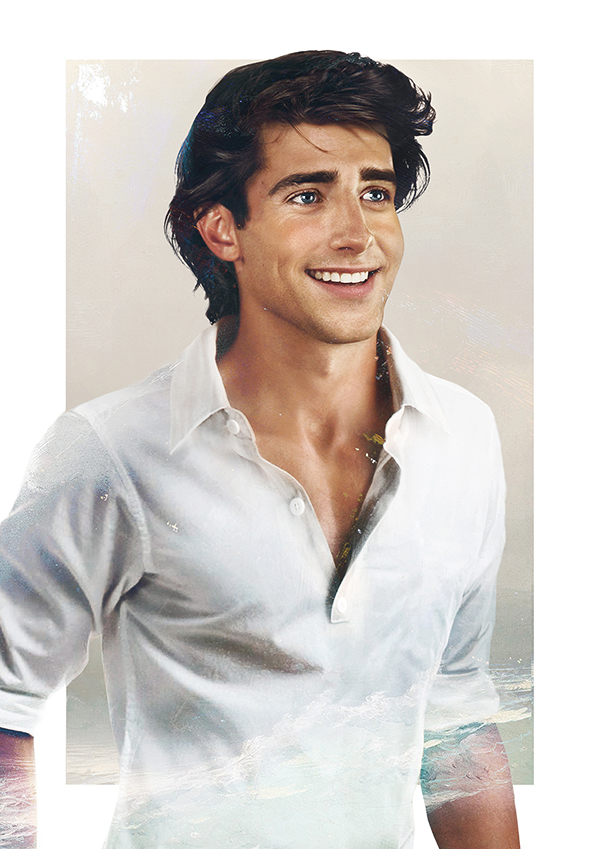
            Recently, I stumbled upon a collection of realistic portraits of Disney characters. These images serve to show what the autor imagines Disney characters would look like if they were real people. Jirka Väätäinen, the creator of this collection, did this study independently, without any affiliation to Disney. This artist has been around for some time. He has many other collections to see on his website.
            This collection has no one specific audience. It is likely that any Disney fan will enjoy these pieces. Väätäinen created these works after being inspired by characters in the Disney stories.
            Väätäinen uses appropriation of familiar characters in this collection. This effect reminds viewers of the Disney magic. Many people love Disney, so by seeing this collection, they are again inspired by their favorite stories. The purpose of this collection was simply to show viewers what it would look like if various Disney characters lived in the real world.

            The author’s purpose was to show how many popular and beloved characters would look if they were not animated. I think Väätäinen is a phenomenal artist who was able to redesign Disney characters, and make it look easy. I think Väätäinen was able to achieve the goal of appropriating these characters because I barely have to use any imagination to imagine them in the real world.
See the whole collection here.

Monday, November 16, 2015

TOW #9 - Paris Under Attack

            Recently, terrorist attacks have occurred in several major cities across the globe. One of these attacks occurred in Paris, France. This article gave information about what had occurred in France, as well as informing readers about some victims and ISIS, the terrorist group that orchestrated the attack. This piece was published on CNN. CNN is a very longstanding news publication. The article was written by Mariano Castillo in collaboration with Margot Haddad, Michael Martinez, and Steve Almasy. Mariano Castillo is both a writer and a supervising editor at CNN.
            This piece was made to inform the rest of the world about the tragic events that occurred in Paris. It was written very shortly after the Parisian terrorist attack took place.
            This text contains serious and terrible information. The authors used didactic to inform readers of the events that had occurred in Paris earlier this month. The effect of teaching readers about the terrorism that had just transpired creates a very serious tone. In reading this article, I learned that over one hundred twenty people had been killed. Because of the somber tone and didactic, it is clear how grave the situation was.
            The authors’ purpose in writing this text was to inform readers about the terrorist attacks that have just occurred in Paris. I think that the authors did achieve their purpose. I was able to learn many things about the tragic event. Before this article, I knew that terrorists attacked the city, but I didn’t know any of the specifics. Now, I know how many people died, the names of some of the victims, and the names of some of the terrorists. This was a very well done piece. 

Wednesday, November 11, 2015

IRB #2 Intro

For my second IRB, I am reading Freakonomics by Stephen J Dubner and Steven Levitt. I am reading this book because I have heard good reviews about this book, and because it sounds funny.

Saturday, October 31, 2015

TOW #8 - Hurricane Patricia

            For my TOW number eight, I read a piece about Hurricane Patricia. It tells readers about the Hurricane. While reading, I learned about the low air pressures and the high wind speeds. This article was published on weather.com, a website dedicated to forecasting the weather and sharing weather related news. The website is dedicated to giving the most accurate information it can give.
            This article was published to inform people about this weather crisis occurring in Mexico. The intended audience is, therefore, everyone else in the world. The text was written shortly after the hurricane dissipated, so everyone could be aware of the weather that occurred.
        This article relied heavily on the use of didactic. Its purpose was to teach readers about Hurricane Patricia. It did not do anything more than that. The article was purely informative.

            The author’s purpose was to inform readers about this hurricane. I think they could have gone above and beyond by informing readers of how they could join in the effort to help the people who were affected by this storm. Even though this article was a bit minimal, I think that the author did achieve their purpose of teaching readers about how severe Hurricane Patricia was.

Saturday, October 24, 2015

Tow #7 - IRB: Fast Food Nation

            This week, I read the second half of my IRB, “Fast Food Nation,” by Eric Schlosser. This book shows readers what goes on behind the curtain in the world of processed food. This text aims to inform readers about how fast food is made, by displaying both the good and the bad. Eric Schlosser is a credible source because he spent two years conducting research for this book. In addition to that, he coproduced the documentary Food, Inc.
            The audience for Schlosser’s “Fast Food Nation” is the average American. Eric Schlosser wanted to inform readers of the effects that fast food production has had on workers. This book asks readers to take a closer look at the demand in fast food production and how it harms production workers. While fast food is not exclusive to America, Schlosser believes that the problem that is fast food is getting out of hand. After workers continued to be severely harmed in the production of fast food products, Schlosser’s research brought light to a subject that was previously being brushed under the rug.
            Schlosser uses a lot of anecdotes to further his points. He shares stories about different ways different workers have been injured while working to create fast food products. He also informs readers how big companies that employ these workers who get injured brush their injuries (and sometimes deaths) under the rug, and inspire fear of reporting said injuries. These anecdotes further Schlosser’s purpose of showing how terrible fast food is in America, and how it does more harm than good in a multitude of ways.
            I think that Schlosser does not achieve his purpose. I feel horrified, but I don’t think I will begin a fast food boycott, and I don’t think anyone else will either. Also, Schlosser writes in such an uninteresting way, that I had to take a nap after reading just one-fifth of the second half of the book. I honestly would only recommend this book to an insomniac.